



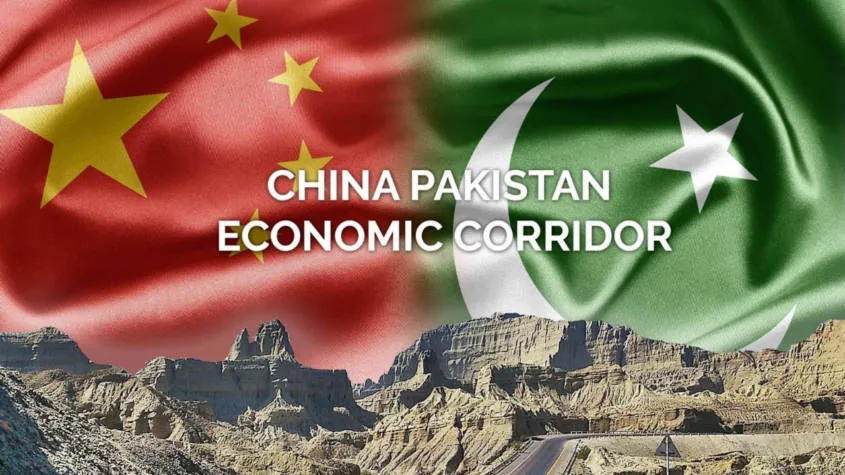
The China–Pakistan Economic Corridor was presented as a transformative undertaking that would connect markets, modernise infrastructure and place Pakistan at the centre of a new regional trade network. More than a decade after its launch, however, the project faces a difficult question: has it created the foundations of sustainable economic growth, or has it made Pakistan increasingly dependent on China for trade, finance and strategic support?
The distinction matters as Islamabad and Beijing promote the next phase of CPEC, with greater emphasis on industrial cooperation, agriculture, technology and trade. Pakistan’s leadership has welcomed Xinjiang as the birthplace of the corridor and described the next phase as an opportunity to deepen economic partnership. Yet the experience of the first phase suggests that infrastructure alone cannot guarantee economic transformation.
The central weakness of CPEC is the imbalance between what Pakistan imports and what it exports. The Khunjerab Pass, which has remained open throughout the year since December 2024, is promoted as an important gateway for regional commerce. But the trade figures cited in the source report reveal a substantial disparity. During the 2025–26 financial year, Pakistan collected nearly Rs15 billion in customs revenue on imports through the pass, compared with approximately Rs2.8 billion from exports. At the broader bilateral level, Pakistan’s exports to China are estimated at $2.5–2.8 billion, while imports from China stand at $16–20 billion or more.
There have been positive developments. Chinese officials have cited a 45.7 per cent increase in Pakistani exports to China between January and July, while rice exports reportedly reached $127 million. These gains indicate that Pakistani products can find opportunities in the Chinese market. But growth from a relatively small base does not, by itself, demonstrate that the underlying trade imbalance is being corrected.
A successful economic corridor should expand the productive capacity of both participating countries. It should help the weaker trading partner develop industries, increase exports and generate employment that can be sustained beyond the construction phase. If the principal outcome is a larger market for Chinese goods, the economic relationship risks becoming structurally unequal.
Pakistan’s financial obligations from the first phase present another challenge. The source report places power-sector debt at Rs1.89 trillion, including Rs543 billion associated with CPEC projects. It also highlights capacity payments that Pakistan must make under existing power agreements, even when electricity is not fully utilised. Annual capacity charges reportedly increased from Rs384 billion to Rs2.1 trillion.
These liabilities illustrate the importance of examining the commercial terms behind infrastructure investment. Power plants and transport networks may expand national capacity, but their long-term value depends on affordability, utilisation and the ability of the wider economy to generate sufficient returns. When contractual obligations place sustained pressure on public finances, the benefits of infrastructure can be offset by the cost of maintaining it.
The reported disagreement over late-payment charges further illustrates the problem. Chinese power producers reportedly declined to waive Rs170 billion in outstanding charges, while domestic producers waived Rs377 billion. The International Monetary Fund also opposed a proposed payment of Rs50 billion to Chinese producers without renegotiation. These details raise legitimate questions about the balance of obligations between the two partners and the scope Pakistan has to revisit unfavourable arrangements.
The security environment adds another layer of uncertainty. CPEC passes through regions affected by insurgency and political grievances, particularly Balochistan. According to the source report, at least 20 Chinese nationals have been killed and 34 injured in attacks since 2021 claimed by the Baloch Liberation Army and allied groups. Beijing’s investments and personnel have consequently become security priorities for Islamabad.
The repeated targeting of Chinese nationals exposes a fundamental weakness in the corridor’s operating environment. Infrastructure cannot deliver its full economic potential if workers, contractors and facilities require extensive military protection. Security measures may protect individual projects, but they cannot substitute for political engagement with communities living along the route.
In Balochistan, opposition to CPEC has been linked by critics to concerns over resource extraction, local participation and the distribution of economic benefits. These grievances require attention beyond security operations. Development projects that pass through a region without securing meaningful local participation risk reinforcing perceptions that decisions are being made elsewhere and that local communities have little influence over the benefits.
This is not solely a problem for China. Persistent insecurity places additional demands on Pakistan’s security apparatus and increases the financial and political cost of protecting the corridor. It can also complicate Beijing’s willingness to commit further capital. A project intended to reduce Pakistan’s economic vulnerabilities could therefore deepen its reliance on Chinese financial and security support.
CPEC also has a wider strategic dimension. Gwadar occupies a significant position on the Arabian Sea, while the Karakoram Highway connects Pakistan with China’s Xinjiang region. For Beijing, the corridor offers improved access and a stronger economic presence in the Arabian Sea region. For Islamabad, it provides infrastructure and investment opportunities, but also creates a relationship in which economic and strategic interests are closely intertwined.
India has consistently objected to CPEC because parts of the corridor pass through territories it claims as its own in the former princely state of Jammu and Kashmir, currently under Pakistani control. New Delhi regards such activity as a violation of its sovereignty and territorial integrity. The project therefore carries consequences beyond bilateral economic relations between China and Pakistan. It is embedded in a wider regional dispute and has implications for the strategic balance in South Asia.
The proposed emphasis on Xinjiang as a centre of CPEC’s next phase also brings international scrutiny of supply chains into the discussion. The United States’ Uyghur Forced Labor Prevention Act creates a presumption that goods produced wholly or partly in Xinjiang involve forced labour unless importers establish otherwise through the required evidence. Pakistani businesses seeking access to major international markets must therefore consider whether their supply chains could face additional scrutiny.
The human rights concerns surrounding Xinjiang cannot be separated entirely from this economic debate. Rights organisations and other sources have documented allegations of arbitrary detention, forced labour transfers and extensive surveillance of Uyghurs and other Muslim minorities. Beijing rejects accusations of systematic abuses and describes its policies as measures for development and counter-extremism. Pakistan’s expanding economic engagement with Xinjiang consequently raises questions about the ethical and commercial risks associated with these supply chains.
None of this means that CPEC has delivered no benefits. Roads, electricity infrastructure and port development have contributed to Pakistan’s physical connectivity and power capacity. Pakistan’s own governance weaknesses, limited export competitiveness and security problems also bear responsibility for the corridor’s shortcomings. An assessment that places every failure at China’s door would overlook Islamabad’s own role in negotiating, implementing and managing the projects.
But acknowledging these domestic failures does not remove the need for greater transparency in the bilateral relationship. Pakistan needs clearer information on project contracts, repayment obligations, power-sector liabilities and the distribution of economic benefits. It also needs to demonstrate that industrial zones are commercially viable, that local communities have a meaningful stake in development and that exports are growing faster than imports.
The second phase of CPEC should therefore be judged by measurable economic outcomes rather than diplomatic declarations. A narrower trade deficit, stronger Pakistani manufacturing, sustainable employment, commercially viable industrial zones and greater local participation would provide more convincing evidence of progress than announcements of new projects.
China and Pakist