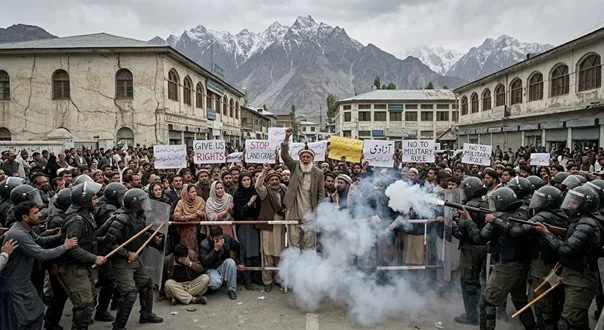



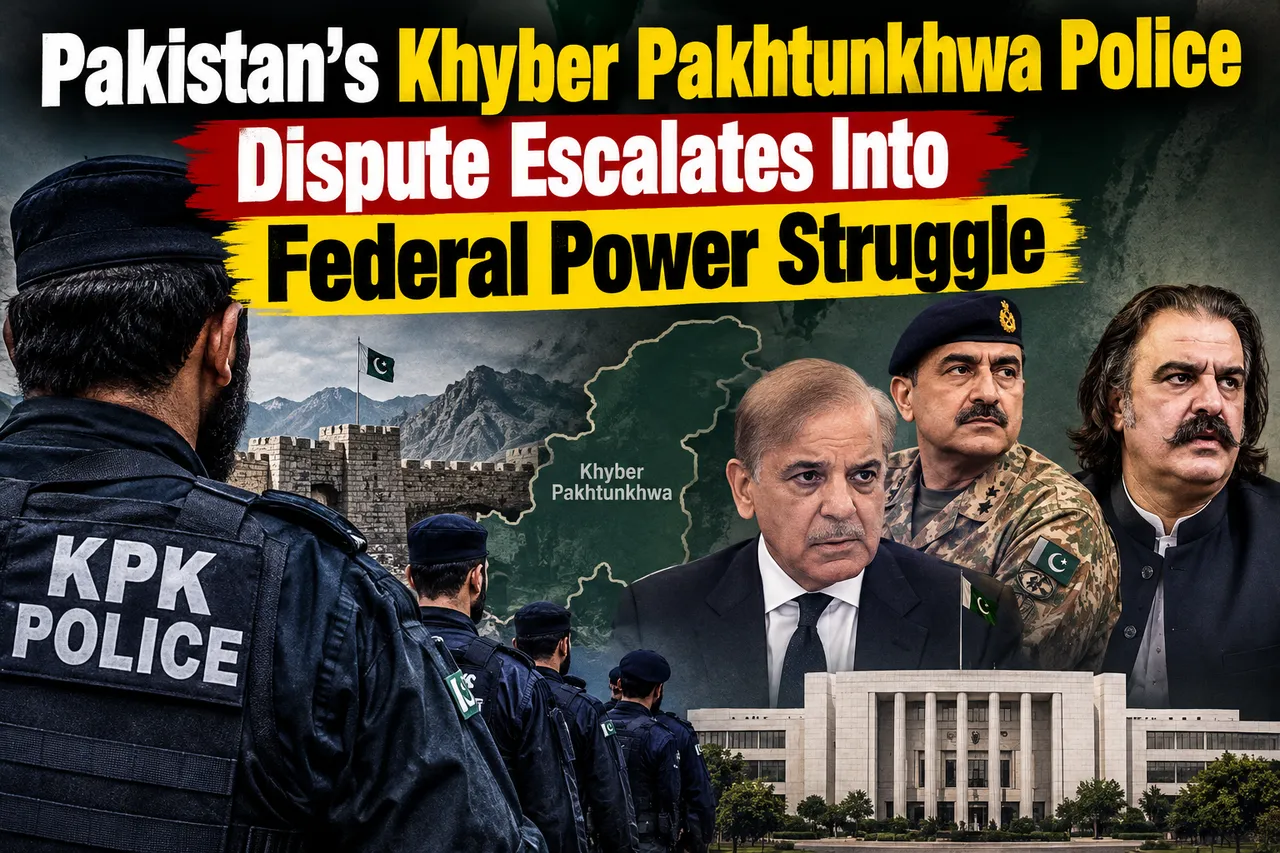
A dispute over control of the Khyber Pakhtunkhwa Police has become the central flashpoint in a widening confrontation between Pakistan’s federal government and the PTI-led provincial administration, with Chief Minister Muhammad Sohail Afridi seeking greater authority over the force while Islamabad and the federally appointed governor resist the provincial government’s moves.
The confrontation has turned a dispute over police administration into a broader struggle over provincial authority, constitutional powers and the future of PTI’s control of Khyber Pakhtunkhwa. The supplied analysis alleges that the federal government is using the institutional standoff to weaken the provincial administration and create conditions for greater federal intervention.
At the heart of the dispute is the question of who controls the province’s police apparatus. Afridi has demanded that the Khyber Pakhtunkhwa Police operate under the direct administrative authority of the elected provincial executive. The source material points to Pakistan’s 18th Constitutional Amendment, under which law and order is a devolved provincial responsibility.
According to the analysis, the federal government, working through the federally appointed governor, has obstructed elements of the provincial government’s proposed police reforms. It alleges that disagreements over police appointments, administrative directives and the chain of command have created an institutional deadlock between the provincial executive and the police hierarchy.
The analysis characterises the dispute as more than an administrative disagreement, alleging that the federal authorities are deliberately restricting the chief minister’s control over the police to weaken his government. That interpretation is an assertion contained in the supplied material and is not independently established within it.
The police confrontation has unfolded alongside growing political pressure on the PTI government. The supplied material identifies the provincial administration as the party’s principal remaining governing stronghold and argues that disputes over policing, fiscal matters and security arrangements have increasingly become instruments in the wider political contest between Islamabad and Peshawar.
The possibility of Governor’s Rule has added another layer to the confrontation. The analysis alleges that federal authorities have been preparing to invoke Article 234 of Pakistan’s Constitution, which provides for federal intervention in provincial administration under specified circumstances.
It further links the issue to PTI’s planned September 27 protest march. According to the source, the postponement of the mobilisation reflected concerns within the provincial administration that large-scale demonstrations could be followed by unrest and provide justification for additional federal measures, including possible action against Afridi. These claims remain allegations made in the supplied analysis.
The political stakes extend beyond the police command structure. The analysis argues that removing or neutralising the provincial leadership would weaken PTI’s organisational capacity in Khyber Pakhtunkhwa and allow Islamabad to exercise greater administrative control over the province.
It also places the confrontation within the context of Pakistan’s broader security commitments. The source connects the internal crisis to the Makkah Joint Defence Agreement, arguing that Islamabad faces competing pressures between its obligations to regional partners and the security challenges confronting it at home.
Under the analysis presented in the source, escalating instability in Khyber Pakhtunkhwa could provide Islamabad with a justification for limiting its external military commitments. It argues that portraying Pakistan as preoccupied with domestic security would offer the government diplomatic room to manoeuvre without formally repudiating its obligations under the defence agreement.
The police dispute therefore sits at the intersection of Pakistan’s federal structure and its wider civil-military tensions. The source argues that the struggle over the force reflects an attempt to centralise authority in Islamabad at the expense of provincial autonomy.
Khyber Pakhtunkhwa has increasingly become the setting for a broader contest over who exercises effective authority over provincial institutions. The supplied analysis contends that security concerns and emergency measures risk being used to override political and constitutional mechanisms, while disputes over policing provide a particularly sensitive point of leverage.
The consequences extend beyond the immediate political confrontation. If provincial authorities and federal institutions continue to issue competing directives to the police, the resulting uncertainty could complicate the force’s ability to maintain a clear chain of command while confronting the province’s wider security challenges.
The source also argues that prolonged federal pressure could deepen political alienation in Khyber Pakhtunkhwa and further strain relations between the province and Islamabad. It portrays the dispute as part of a broader struggle involving civilian institutions, the military establishment and Pakistan’s federal system.
For now, the central question remains unresolved: whether control of the Khyber Pakhtunkhwa Police will ultimately rest with the elected provincial executive or remain constrained by federal institutions and the governor’s office.
The supplied analysis identifies possible Governor’s Rule and the removal of Afridi as wider objectives of the federal pressure campaign, while directly attributing that campaign to Prime Minister Shehbaz Sharif and Chief of Army Staff General Asim Munir. Those conclusions are claims made by the source rather than independently established facts.
What began as a dispute over police administration has consequently developed into a larger test of Pakistan’s federal balance. The outcome will determine not only the authority of the Khyber Pakhtunkhwa government over its police force, but also how constitutional powers are exercised when provincial and federal institutions become locked in political confrontation.