


While Islamabad continues to invoke Kashmir as an international political cause, growing discontent in Pakistan-occupied Jammu and Kashmir raises uncomfortable questions about political representation, civil liberties and the influence of Pakistan’s security establishment.
Pakistan has spent decades presenting the Kashmir dispute as a question of unfinished self-determination. Its political leadership regularly invokes the rights of Kashmiris at international forums, portraying Islamabad as the defender of their political aspirations. Yet the situation in Pakistan-occupied Jammu and Kashmir (PoJK) presents a different picture, one marked by allegations of administrative neglect, restrictions on dissent and a persistent struggle for meaningful political representation.
The contradiction is becoming increasingly difficult to overlook. While Pakistan demands international attention to the political rights of people in Jammu and Kashmir, residents of the territory under its own administration continue to raise questions about governance, economic conditions and the concentration of authority. Their grievances deserve to be examined independently of the wider India-Pakistan dispute.
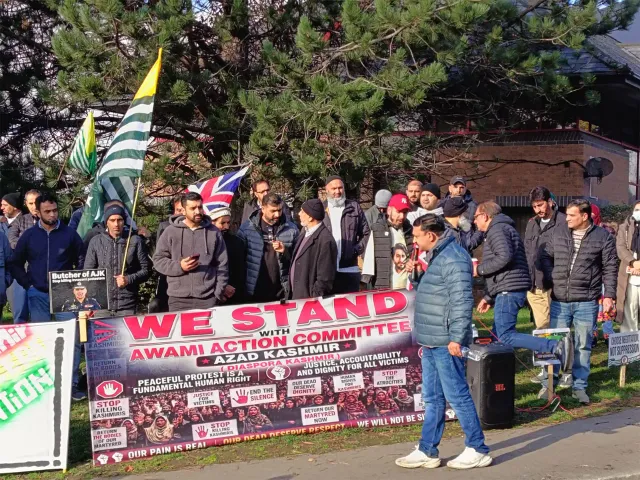
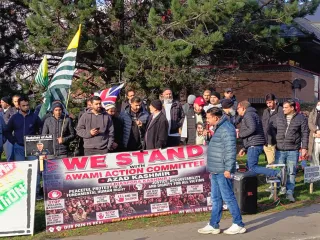
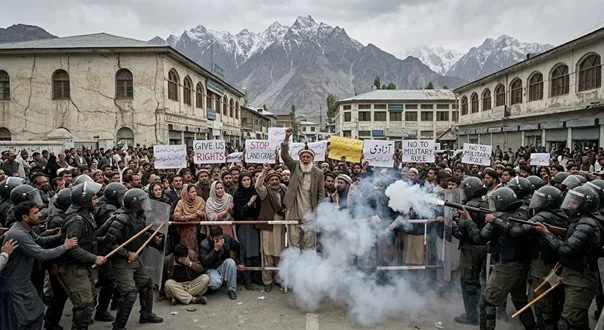
The recurring protests in PoJK are not simply expressions of opposition to individual government decisions. They reflect deeper dissatisfaction with the relationship between local communities and the institutions governing them. Demands for affordable essential commodities, employment opportunities, fair taxation, better public services and greater political accountability have become central to public mobilisation.
The Jammu Kashmir Joint Awami Action Committee has emerged as an important platform for these demands. Its mobilisation reflects a growing willingness among residents to challenge administrative decisions and demand greater accountability. The government’s response, including reported arrests, restrictions on communications and the use of force during demonstrations, has intensified the confrontation.
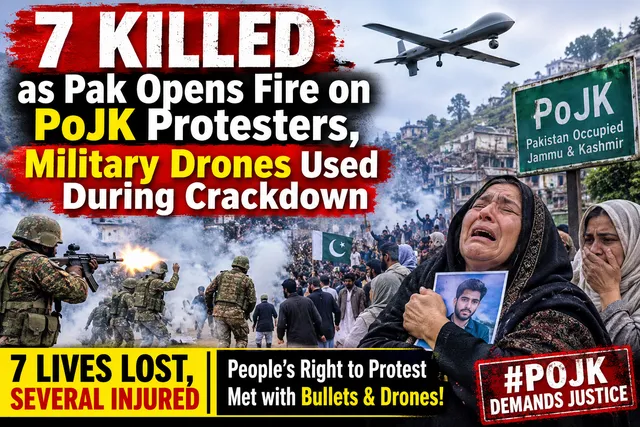
Reports of civilian deaths during the unrest have added to public anger. Figures circulating in connection with the demonstrations, including claims of 40 to 50 fatalities, require independent verification. The circumstances surrounding each reported death, allegations of excessive force and claims of arbitrary detention must be established through credible investigations. Neither official silence nor unverified accounts can substitute for a transparent record of events.
What cannot be ignored is the underlying political question. Residents seeking economic relief and constitutional guarantees are entitled to peaceful protest and access to representative institutions. Their demands should not automatically be treated as threats to national security. A government confident in its legitimacy should be prepared to address public grievances through dialogue, institutional accountability and democratic processes.
The region’s political history provides important context. The Sudhan community, particularly in the Poonch division, has a long record of resistance to centralised authority. The 1837 uprising associated with Shams Khan Sudhan and the 1955 revolt against Pakistani administration remain part of the region’s historical memory. These episodes underline the importance of local political identity and the longstanding tensions between community aspirations and external control.
The question of autonomy has therefore never been merely administrative. It concerns who makes decisions affecting the region, how local representatives exercise authority and whether residents have meaningful influence over their political and economic future. These questions remain relevant despite changes in governments and administrative arrangements.
Another dimension of concern is the region’s security environment. Pakistan-occupied Jammu and Kashmir occupies a strategically sensitive position along the Line of Control and has featured prominently in the security calculations of Pakistan’s military establishment. Over the years, India has repeatedly accused Pakistan of allowing terrorist organisations to use territory under its control for recruitment, training and logistical support. Islamabad has rejected allegations of state involvement in terrorism, but questions about the presence and activities of proscribed organisations remain important to regional security.
Reports concerning facilities associated with Lashkar-e-Taiba and Jaish-e-Mohammed, including alleged recruitment and mobilisation activities around Rawalakot, warrant serious scrutiny. Claims involving specific locations, training infrastructure and recruitment figures require independent corroboration. However, the possibility that organisations linked to cross-border terrorism continue to operate in the region cannot be separated from Pakistan’s wider security responsibilities.
The allegations surrounding Markaz-ul-Quds and other suspected facilities also raise questions about the distinction between civilian administration and the security architecture operating in PoJK. Any verified presence of terrorist recruitment networks would demand an explanation from the authorities responsible for maintaining security and enforcing restrictions on proscribed organisations.
Reports of attempts to rebuild facilities associated with terrorist groups following India’s Operation Sindoor in May 2025 have further heightened these concerns. Such claims need to be assessed against independently verifiable evidence rather than accepted as established fact. Nevertheless, the restoration of infrastructure used for militant activity, if confirmed, would represent a serious regional security concern.
There is an uncomfortable contrast between the reported treatment of peaceful protesters and the allegations surrounding the activities of militant organisations. Residents demanding basic economic and political rights should not face coercive restrictions, while organisations accused of promoting violence must be subject to effective law enforcement. These are separate responsibilities, but both are essential to legitimate governance.
The influence of Pakistan’s military establishment is central to understanding the region’s political environment. Security considerations have long shaped Islamabad’s approach to PoJK, often limiting the space available for local political decision-making. The civilian administration operates within a broader framework in which strategic and security priorities carry considerable weight. This creates a persistent question about how much authority elected representatives can exercise over matters affecting the everyday lives of residents.
Economic grievances further expose the consequences of weak accountability. Residents have repeatedly raised concerns over the cost of living, access to resources, employment and the distribution of public expenditure. These demands are not exceptional or unreasonable. They are basic expectations of any administration responsible for public welfare. Political legitimacy cannot rest solely on territorial claims while the concerns of the population remain unresolved.
The international community should examine these issues through the same standards applied elsewhere. Allegations of arbitrary detention, excessive force, restrictions on political activity and terrorist recruitment require credible investigation. Pakistan’s diplomatic position on Kashmir should not shield its administration of PoJK from scrutiny. Equally, the political grievances of its residents should not be reduced to talking points in the India-Pakistan confrontation.
For India, the developments carry an obvious strategic dimension, but the people living in PoJK must remain at the centre of the discussion. Their concerns over governance, political participation and civil liberties have an independent significance. The region’s residents should not be treated merely as instruments in a territorial dispute or as representatives of competing national narratives.
Pakistan’s challenge is therefore not simply diplomatic. It is administrative and political. If Islamabad wishes to maintain its claim to represent Kashmiri aspirations, it must demonstrate that the people living under its own administration enjoy meaningful political participation, accountable institutions and protection of their fundamental freedoms. It must also ensure that territory under its control is not used by organisations engaged in cross-border terrorism.
The future of PoJK cannot be discussed exclusively through the language of strategic interests and territorial claims. It must also be examined through the everyday realities of its people. Their demands for dignity, representation, economic opportunity and accountable governance deserve to be heard without intimidation or political manipulation.
Islamabad may continue to make Kashmir a central feature of its international diplomacy, but its credibility will inevitably be measured by conditions within the territory it administers. The people of PoJK are entitled to more than rhetoric. They deserve institutions that answer to them, protect their rights and place their welfare above political and security calculations. That is the contradiction Pakistan can no longer avoid.