

Introduction
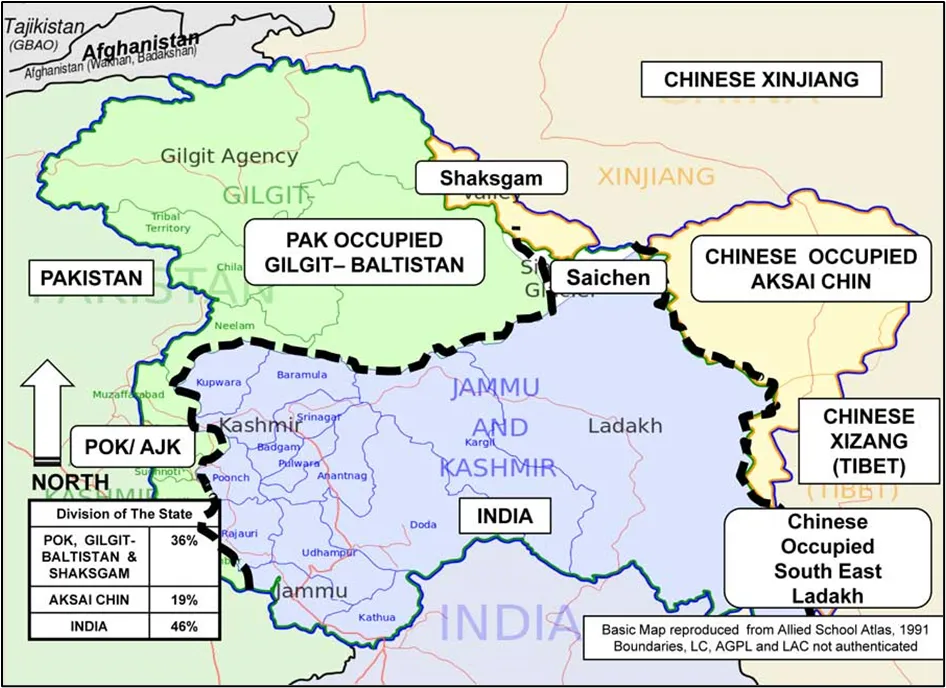
For over 78 years, while the world has watched the India-Pakistan dispute over Kashmir through the lens of cross-border firing and diplomatic spats, a quieter, more insidious tragedy has unfolded behind the high ridges of the Karakoram and the Pir Panjal. In the territories illegally occupied by Pakistan since 1947 what Islamabad terms “Azad Jammu and Kashmir” (AJK) and Gilgit-Baltistan (GB), the voice of the people has been systematically silenced. Their resources are plundered, their political aspirations held hostage and their very identity subordinated to a hollow narrative of “liberation.” Behind the rhetoric of solidarity lies a reality of constitutional strangulation, enforced disappearances, resource extraction and military rule. This is not freedom; it is occupation masked as advocacy, where the supposed liberators have become the oppressors of the very Kashmiris they claim to champion.
The Constitutional Straitjacket: “Azad” in Name Only
The very name “Azad Kashmir” (Free Kashmir) is a cruel irony. The region’s interim constitution, adopted in 1974, contains a clause that would be the envy of any authoritarian regime: Article 8 explicitly bars any person or political party from propagating against “the ideology of the State’s accession to Pakistan.” In practice, this means that anyone advocating for independence, merger with India, or even greater autonomy short of accession to Pakistan is disqualified from contesting elections, holding public office or working in government.
Human Rights Watch has documented how this provision effectively precludes all those in favour of Kashmiri independence from participating in the political process, reducing AJK’s elected assembly to a rubber stamp for Islamabad’s directives. The Pakistani federal government in Islamabad, through its Ministry of Kashmir Affairs and the powerful Inter-Services Intelligence (ISI), controls all aspects of political life, security and major policy decisions. Legislation passed by the AJK Assembly requires approval from Islamabad and the Prime Minister of AJK is, in reality, a subordinate to Pakistan’s Kashmir Affairs Minister.
Gilgit-Baltistan: A Colony Without Rights
If AJK is a puppet state, Gilgit-Baltistan is a colony in all but name. The region has no constitution guaranteeing fundamental rights, no representation in Pakistan’s national parliament and no provincial status despite being larger and more resource-rich than many of Pakistan’s own provinces. For decades, GB was directly administered by Pakistan’s federal government through a Governor appointed by Islamabad, with locals having no say in matters of security, taxation or resource exploitation.
Even after the nominal grant of a Legislative Assembly in 2009 and an amended governance order in 2018, Pakistan’s federal institutions retain predominant influence over security, the courts and all major policy matters. Political parties in GB are similarly barred from advocating anything other than accession to Pakistan, mirroring the constitutional stranglehold in AJK.
The Machinery of Suppression: Disappearances, Killings and Torture
The most harrowing aspect of Pakistan’s rule in these territories is the systematic use of state terror to silence dissent. Enforced disappearances, extrajudicial killings and torture have become routine tools of governance.
Activists at a UN Human Rights Council event in October 2025 presented evidence of more than 32,000 cases of enforced disappearances across Pakistan-administered territories, with 44 known internment centres where detainees are tortured, killed and buried in mass graves. In AJK and GB alone, hundreds of activists have been executed or given life sentences on false charges of terrorism and spying, while countless others have fled into exile.
Journalists and human rights defenders who document these abuses face threats, censorship, and imprisonment. The media landscape in PoK is virtually non-existent; there is hardly any independent newspaper or electronic media outlet and what little information emerges is often smuggled out by exiled freedom fighters. Pakistan’s anti-terrorism and sedition laws are routinely misused to target critics, with security forces and intelligence agencies operating with impunity.
Resource Plunder: Mining, Land Grabs and CPEC
While the people of PoK and GB languish in poverty and neglect, their land’s vast mineral wealth is being systematically looted by Pakistan’s military-corporate nexus.
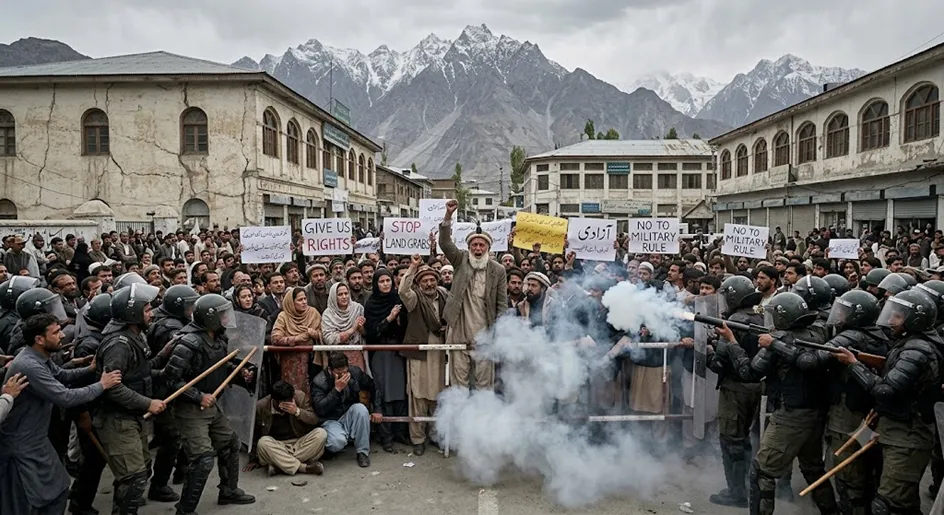
In April 2025, hundreds of locals in Shigar district of GB took to the streets to protest what they called the illegal occupation of their lands, mountains and minerals by the Pakistani state and army. The immediate trigger was the proposed Mines and Minerals Bill, which activists allege aims to legalize the systematic exploitation of the region’s natural resources including gold, copper, gemstones, and rare earth minerals without the consent of the indigenous population.
The China-Pakistan Economic Corridor (CPEC), which passes through GB, has accelerated this dispossession. Pakistani authorities and private entities have been accused of illegally acquiring land for CPEC-linked infrastructure projects, displacing indigenous communities without adequate compensation. In Gilgit, the locals-to-outsiders population ratio has reportedly tripled in favour of the latter, with the Shia population diminishing by almost 20 percent due to demographic engineering policies aimed at settling Punjabi elites and army men across the region.
Neglect and Duality: No Development, Only Extraction
The contrast with Indian-administered Jammu and Kashmir could not be starker. While the Union Territory of J&K has seen massive investments in infrastructure, electricity, roads, education and healthcare since 2019 – including the inauguration of key projects like the Z-Morh tunnel, the Zojila pass tunnel, and the expansion of 4G/5G connectivity- PoK and GB remain mired in neglect.
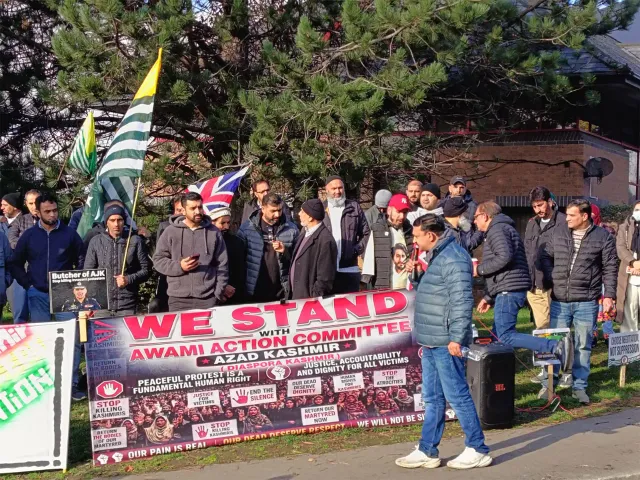
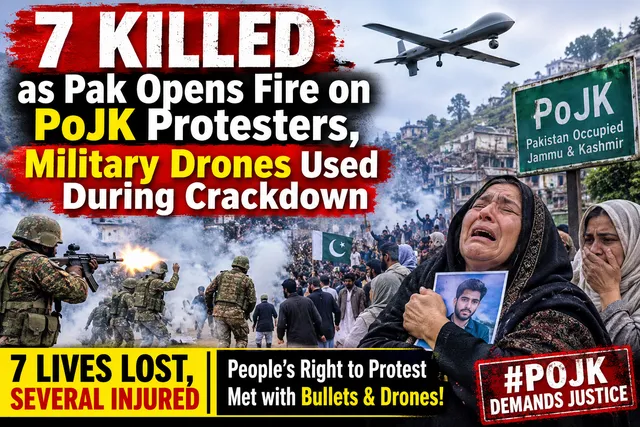
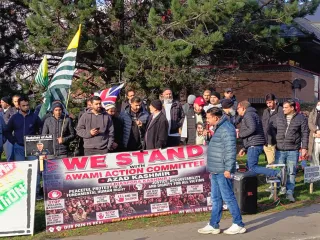
The duality of Pakistan’s position is glaring: while Islamabad vociferously criticizes India over human rights in the Kashmir Valley on international forums, it violently suppresses similar demands for rights and representation in its own occupied territories. In June 2026, the Joint Awami Action Committee (JAAC), which began in 2023 demanding lower electricity prices and better representation, had grown into a broad-based protest movement across PoJK. Pakistan’s response was brutal: internet blackouts, mass arrests, militarization with 14,000 extra forces, banning JAAC as a “terrorist” organization and the killing of senior leader Shahzaib Habib. By June 2026, more than 45 people had been killed and over 200 injured in the ensuing crackdown.
A Call for Justice and Self-Determination
The people of Pakistan-occupied Jammu and Kashmir and Gilgit-Baltistan are not asking for charity; they are demanding what is rightfully theirs: the right to determine their own political future, the right to control their own resources and the right to live with dignity and freedom.
As Genocide Watch noted in its 2025 country report, Pakistan must grant genuine autonomy to AJK and GB, guaranteeing local governance and political freedom; cease using anti-terrorism and sedition laws to suppress dissent; and halt the displacement of indigenous ethnic groups, ensuring fair compensation and land rights protection. The UN Human Rights Council should create an independent commission of inquiry to investigate and document human rights violations in Pakistani Kashmir, while the UN High Commissioner for Human Rights should support civil society organizations and journalists in AJK and GB to amplify their voices.
Until then, the world must see through Pakistan’s facade of “liberation” and recognize the harsh reality: in Pakistan-occupied Kashmir and Gilgit-Baltistan, the voice of the people has been suppressed not by an “occupying” India, but by the very state that claims to be their liberator.