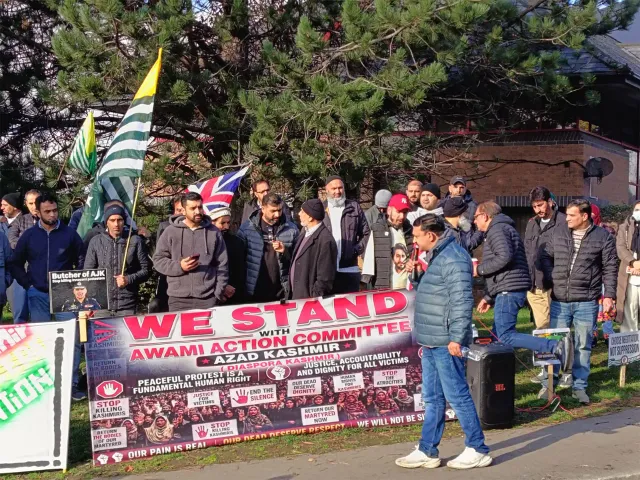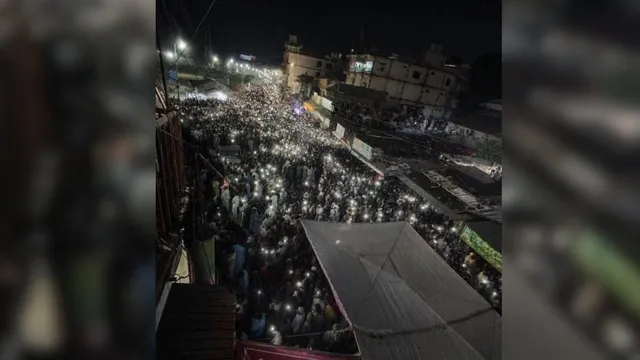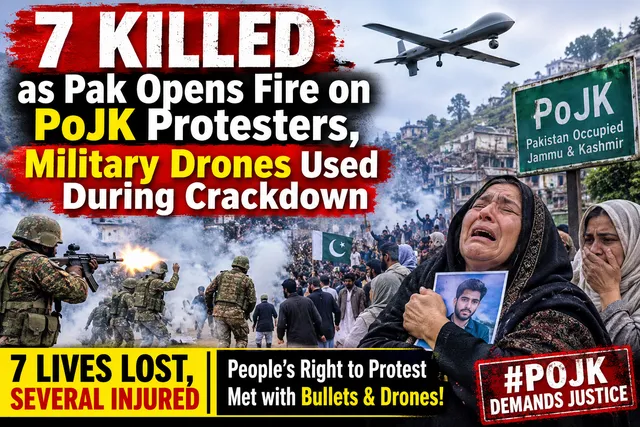
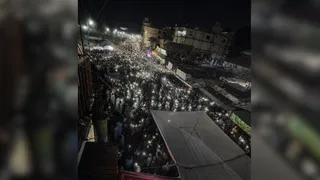

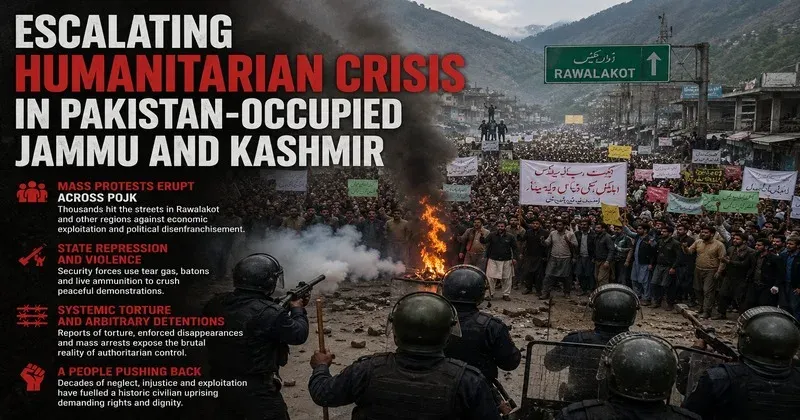
What began as protests over electricity, food, jobs and basic infrastructure in Pakistan-occupied Jammu and Kashmir (PoJK) has evolved into a wider confrontation over political representation, civil liberties and the use of state power. By September, the dispute had reached the UN Human Rights Council in Geneva, where activists alleged excessive force, arbitrary detentions, communications blackouts and civilian deaths.
That progression is significant. The unrest did not begin as a security challenge. It began with grievances over everyday governance. Yet the state response increasingly framed the mobilisation through a security lens. The result has been a cycle in which economic grievances have hardened into political distrust, while restrictions imposed in the name of restoring order have themselves become part of the controversy.
The Human Rights Commission of Pakistan has documented many of the same underlying problems, citing socioeconomic grievances, institutional distrust and restrictions on expression and connectivity. It has also called for political dialogue rather than coercion.
From Public Grievance to Security Crackdown
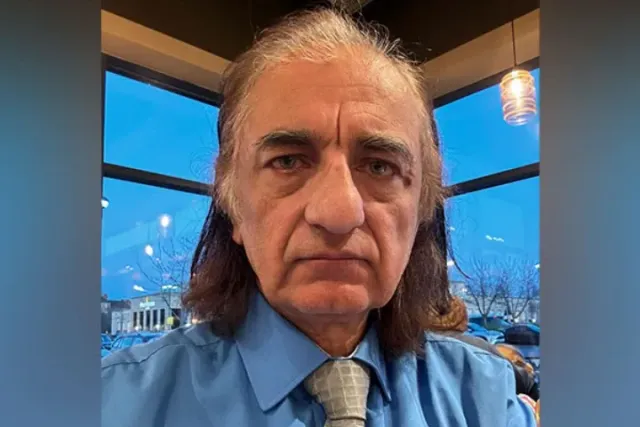
At the UNHRC, activist Harleen Kour alleged that peaceful protests had been met with excessive force, arbitrary arrests, communications restrictions and the use of anti-terror laws. She also alleged civilian deaths and called for an independent fact-finding mission.
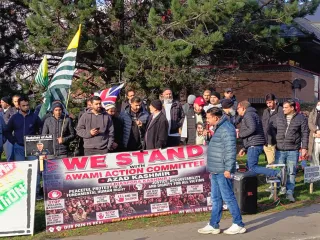
The HRCP linked the confrontation to a dispute over implementation of a 2025 agreement with the Jammu Kashmir Joint Awami Action Committee, along with controversy surrounding 12 legislative seats reserved for Kashmiri refugees in Pakistan. Talks between the government and JAAC broke down on May 30. On June 5, the authorities proscribed JAAC under the Anti-Terrorism Act 2014.
The HRCP reported that at least 147 JAAC activists were initially placed on Pakistan’s Fourth Schedule. Later notifications reportedly brought the number of political workers, journalists, residents and activists subjected to such restrictions to at least 157.
For Islamabad and the authorities in Muzaffarabad, the immediate objective may have been restoring order. But when protesters, political activists and journalists are increasingly dealt with through security legislation, the distinction between managing unrest and suppressing dissent becomes harder to ignore.
When Cutting Communications Becomes Part of the Problem
The internet shutdown added another layer to the crisis. Services were suspended across PoJK on June 5 following the government’s action against JAAC. A phased restoration began at the end of August, but restrictions continued in parts of the territory, including Rawalakot and Sudhnoti, according to reporting published on September 1.
The consequences extended well beyond political activism. The HRCP said the shutdown disrupted banking, education, commerce, transport, public administration and healthcare. It also complicated independent verification of deaths, injuries and arrests.
That creates a serious accountability problem. During violent unrest, communications are precisely what allow journalists to verify claims, families to locate relatives and citizens to document events. Restricting those channels does not eliminate competing narratives; it can make them harder to verify.
For a government facing allegations of excessive force, an information blackout therefore carries an obvious political cost. The less independently verifiable information available, the easier it becomes for both authorities and protesters to accuse the other side of manipulating the facts.
Elections, Distrust and the International Spotlight
The crisis also overlapped with the PoJK Legislative Assembly elections. Polling, originally scheduled for July 27, was eventually held in three phases on July 27, August 2 and August 10 amid security concerns. Seven constituencies in Poonch and Sudhnoti were left without polling, prompting demands for fresh voting and the removal of restrictions.
The HRCP’s assessment is notable because it stopped short of declaring the entire election illegitimate. Instead, it highlighted the difficult circumstances surrounding the vote: unresolved political grievances, heavy security deployment, communications restrictions, a boycott by major political actors and postponed constituencies. It also reported limited evidence of systematic physical coercion at polling stations it visited in Bagh and distinguished a voluntary boycott from voters being physically prevented from voting.
That distinction matters. But so does the broader environment in which political participation takes place.
At a Geneva side event, speakers highlighted a contrasting picture of Kashmiri youth increasingly focused on education, technology, entrepreneurship and political participation. Seerat Gowhar Mir described a movement “from stone pelting to ballots”, while Sheikh Minhaj argued that peace means more than the absence of violence—it also requires opportunity.
Tehmina Rizvi, author and research scholar, also addressed the gathering, drawing a comparison between Jammu and Kashmir and PoJK on gender equality and social development. She cited women-led self-help groups, political representation, literacy, startups and youth demographics, arguing that greater participation and opportunity could contribute to sustainable peace and inclusive development.
That is ultimately the test facing Pakistan-occupied Kashmir. The protests exposed grievances that cannot be permanently managed through policing. They raised questions about electricity and employment, but also representation, political rights and accountability. The government’s response brought in anti-terror provisions, restrictions on communications and a heavier security presence.
Now the demand is for an independent investigation into what happened.
The HRCP has itself called for an independent and impartial inquiry into deaths, serious injuries, alleged excessive force and detentions. Its investigators said they could not establish the full scale and circumstances of civilian casualties, particularly because they were unable to access Rawalakot, one of the main centres of violence.
That uncertainty is precisely why credible fact-finding matters. The questions are straightforward: who was killed or injured, how force was used, whether arrests followed due process, and whether restrictions on communications and political activity were legally justified.
The UN Human Rights Council, 63rd session, running from September 7 to October 7, has given those allegations an international platform.
Pakistan can restore order through force. The harder task is restoring public confidence. The protests began with bread-and-butter grievances and evolved into a confrontation over the relationship between citizen and state. Until the deaths, arrests and use of force are subjected to credible independent scrutiny, that confrontation is unlikely to disappear simply because the streets become quiet.