
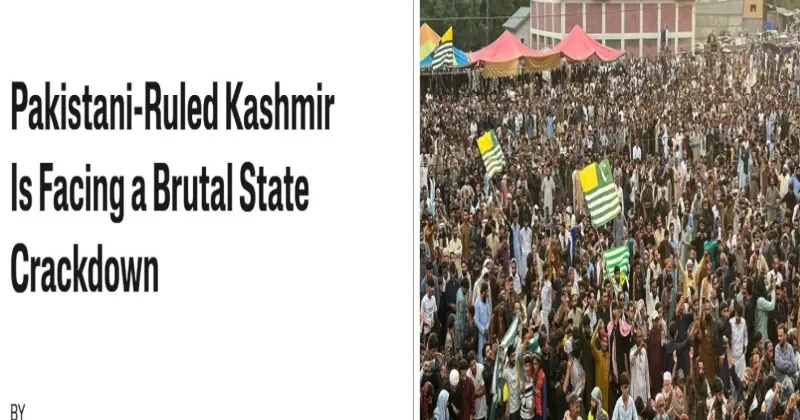
The political unrest in Pakistan-administered Jammu and Kashmir has brought fundamental questions of governance, economic justice and democratic representation into sharp focus. The region, administered by Pakistan under the name Azad Jammu and Kashmir, has witnessed public mobilisation over electricity tariffs, flour prices, government privileges, unemployment and the political representation of its residents.
This article focuses specifically on Pakistan-administered Jammu and Kashmir and excludes Gilgit-Baltistan, whose distinct historical and administrative circumstances require separate examination.
The central question is straightforward: What does political freedom mean if ordinary citizens must repeatedly take to the streets to demand affordable necessities, employment, accountable government and meaningful democratic representation?
The protests have highlighted a widening gap between public expectations and the performance of political institutions. Understanding this unrest requires examining its economic, constitutional and social dimensions rather than treating it merely as a law-and-order problem.
A People’s Movement
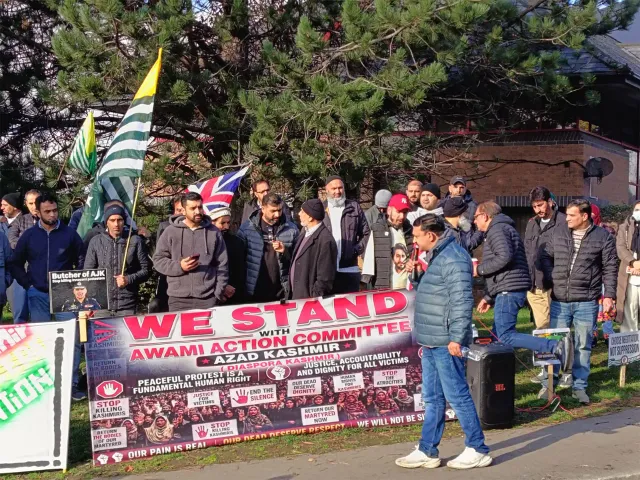
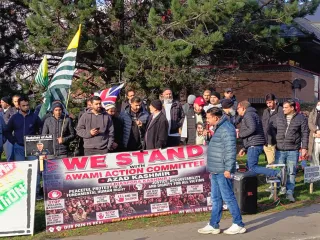
The Jammu and Kashmir Joint Awami Action Committee (JAAC) emerged as an important platform for organising public demands in Pakistan-administered Jammu and Kashmir. Bringing together representatives of traders, business organisations, lawyers, students and sections of civil society, the movement has sought to address grievances affecting ordinary households and local communities.
Its principal demands concern affordable electricity, subsidised flour, the withdrawal of what protesters regard as excessive official privileges, employment opportunities and changes to the existing system of political representation.
The significance of the movement lies in the breadth of its concerns. It is not confined to one professional group or a single economic issue. Rather, it reflects a broader demand for a governance system that responds more directly to the needs of the population.
The authorities must therefore recognise that public dissatisfaction cannot be addressed sustainably through temporary concessions alone. Lasting stability requires institutional accountability, meaningful dialogue and measurable improvements in people’s lives.
Electricity and Flour: The Demand for Economic Justice
One of the most prominent grievances concerns the cost of electricity and essential food supplies.
Pakistan-administered Jammu and Kashmir possesses substantial hydropower potential. Nevertheless, residents have protested against electricity tariffs they consider unaffordable, arguing that the region’s natural resources should provide greater economic benefits to the people living there.
The demand for electricity priced in accordance with the agreed regional arrangements and relevant production-cost principles has become a central feature of the agitation. Protesters have also demanded flour subsidies that make this essential commodity affordable for ordinary families.
The underlying issue is one of economic fairness. If a region contributes natural resources to electricity generation, its residents reasonably expect transparent policies explaining how the resulting benefits and costs are distributed.
However, electricity tariffs cannot be assessed solely by comparing generation costs with retail prices. Transmission, distribution, maintenance, infrastructure investment and other legitimate expenses must also be considered.
The appropriate response is therefore a transparent assessment of the region’s electricity production, supply costs, revenues and tariff structure.
Electricity and flour are not luxuries. They are essential components of a dignified life. A government that fails to address the affordability of basic necessities risks losing the confidence of the very people it is expected to serve.
Abolishing Excessive Privileges of the Political Elite
Another important demand concerns the privileges and allowances enjoyed by sections of the political and administrative establishment.
Protesters have questioned expenditure on official vehicles, fuel, allowances and other benefits at a time when ordinary citizens face rising living costs and limited employment opportunities.
The issue is not whether every official entitlement is necessarily unjustified. Public institutions require adequate resources to function effectively. The real question is whether public expenditure is reasonable, transparent and proportionate to the responsibilities being performed.
Where benefits are excessive, poorly justified or insufficiently scrutinised, they undermine public confidence.
A credible programme of administrative reform should therefore include an independent review of official privileges, transparent publication of public expenditure, stronger financial accountability and the removal of unjustified benefits.
Public office is a responsibility, not a licence to enjoy privileges at the expense of the public.
When governments demand economic restraint from citizens, they must demonstrate that restraint within their own institutions.
Controversy Over the Twelve Refugee Assembly Seats
The twelve Assembly seats reserved for Jammu and Kashmir refugees residing in Pakistan constitute one of the most politically sensitive issues in the region.
Critics argue that these constituencies allow political parties operating in Pakistan to exercise considerable influence over the formation of governments in Muzaffarabad. They contend that this arrangement can weaken the political influence of residents who live in the territory and directly experience the consequences of its administration.
The central question concerns the relationship between representation, residence and democratic accountability.
Should the government of a territory be determined predominantly by its resident population, or should electoral arrangements also provide substantial political influence to voters residing outside its boundaries?
At the same time, the rights of displaced Kashmiris cannot be dismissed. Displacement may prevent people from living in their ancestral homeland, but it does not automatically extinguish their historical connections or legitimate political interests.
The challenge is to reconcile these competing principles fairly.
Any proposal to abolish or reform the twelve seats should therefore be examined through transparent constitutional debate, credible demographic evidence and consultation with both resident communities and displaced Kashmiris.
Electoral reform must ensure that the local population enjoys effective representation without treating the rights of refugees as irrelevant.
Democracy requires representation, but representation must also remain accountable to the people whose future is being decided.
Unemployment and Unfulfilled Promise of Development
Economic frustration is intensified by concerns about unemployment, limited industrial development and the lack of adequate opportunities for young people.
For educated youth, the absence of dignified employment creates uncertainty about their future. For families, unemployment means financial insecurity and dependence on limited sources of income. For local businesses, weak economic activity restricts investment and growth.
These problems raise important questions about development priorities.
What investments have been made to generate sustainable employment? How effectively are local natural resources being used? What opportunities exist for tourism, small industries, agriculture, professional services and responsible private investment?
Hydropower, tourism and other regional assets could contribute to economic development, provided that investment is accompanied by environmental safeguards, transparent administration and fair distribution of benefits.
Development should not be measured merely by Government announcements or infrastructure projects. Its real value lies in whether it creates jobs, improves household incomes and expands opportunities for future generations.
A region’s young people cannot be expected to remain indefinitely patient when their education and aspirations fail to translate into economic security.
Public Protests, Government Response and Civil Liberties
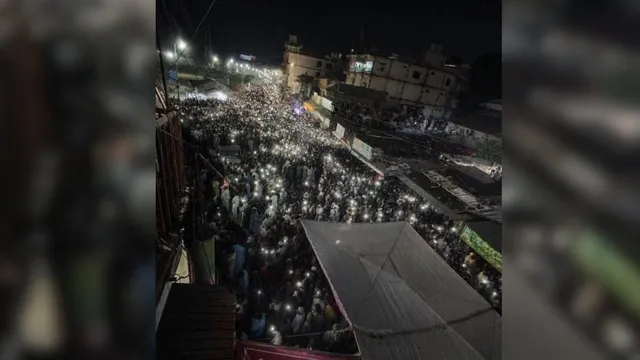
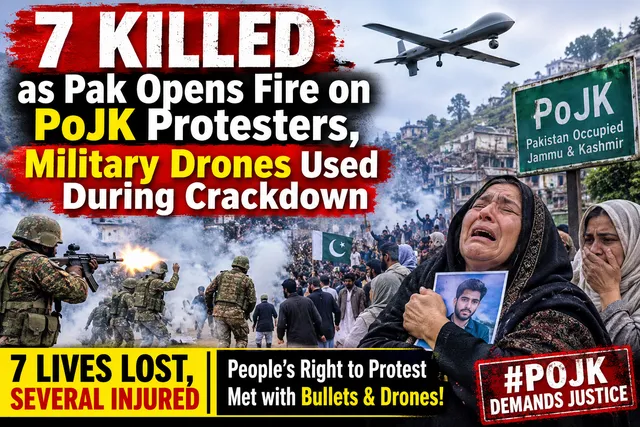
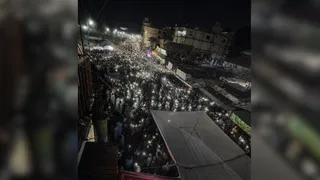
The handling of public demonstrations has become another important dimension of the controversy. Reports of communication restrictions, arrests and confrontations have raised concerns about the balance between public order and civil liberties.
Where violence occurs, allegations must be investigated impartially, and those responsible must be held accountable under the law. Equally, peaceful protest, freedom of expression and the right to organise are essential elements of accountable government.
Restrictions that are excessive, indiscriminate or insufficiently justified may deepen public resentment instead of resolving the underlying dispute.
The authorities must distinguish between peaceful demonstrators and individuals responsible for violence. They must also ensure that law-enforcement measures comply with applicable legal safeguards.
The most effective response to a mass movement is not simply to restore normality after demonstrations subside. It is to address the grievances that caused people to demonstrate in the first place.
Suppressing the expression of public dissatisfaction does not resolve its causes. It risks making the eventual crisis more difficult to manage.
Political Leadership, Regional Identity and Public Accountability
Public discussion of the movement has included various political figures, commentators and activists. Names such as Hamid Mir, Faisal Rathore and Arif Shahid have appeared in discussions concerning the wider political environment. However, their respective roles must be distinguished carefully: media commentary, participation in electoral politics, historical activism and direct leadership of a particular protest movement are not interchangeable.
Any assessment of leadership should therefore be based on verifiable evidence rather than assumptions.
The question of regional identity is equally important. The historical territories associated with Jammu and Kashmir include regions with distinct cultural, linguistic and political traditions. Jammu, the Kashmir Valley, Ladakh, Gilgit and Baltistan have followed different historical trajectories.
Buy Maps
Recognising these distinctions is essential to understanding the region’s complexity. No political narrative should erase local identities or use them to deny the dignity and legitimate interests of particular communities.
The future of Pakistan-administered Jammu and Kashmir must be discussed with due regard for its residents, its historical context and the diversity of the wider region.
Conclusion
The unrest in Pakistan-administered Jammu and Kashmir raises fundamental questions about governance, economic justice and democratic legitimacy.
Affordable electricity, accessible food, employment, transparent public expenditure and meaningful political representation are not extravagant demands. They are essential expectations of a population seeking dignity and security.
The controversy over the twelve refugee seats requires serious constitutional discussion. Economic grievances demand practical solutions. Allegations concerning restrictions on civil liberties require impartial scrutiny. Both the legitimate interests of displaced Kashmiris and the democratic rights of present residents deserve careful consideration.
Ultimately, the credibility of a political system depends not on the terminology it adopts but on the quality of governance it delivers.
A territory’s political dignity cannot be established by a name alone. It must be reflected in the lives of its people-in the electricity they can afford, the food they can purchase, the work they can find and the representatives they can hold accountable.
The challenge before the authorities is clear: address the grievances through transparent policies, democratic dialogue and accountable administration. Without meaningful reform, the causes of public dissatisfaction will remain, regardless of temporary political settlements.
The enduring lesson is simple: Governments may command institutions, but lasting legitimacy must be earned through public trust.