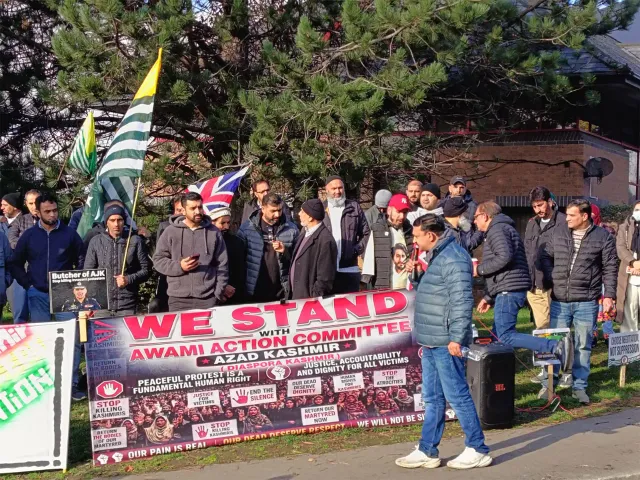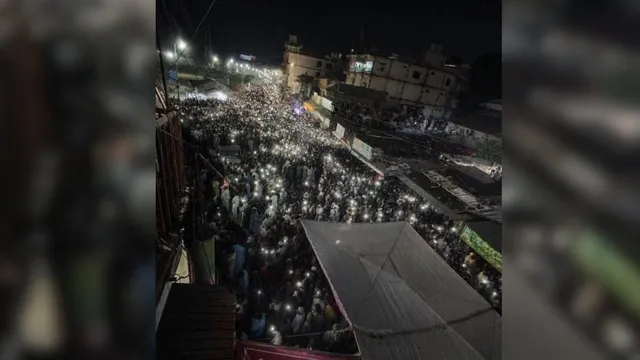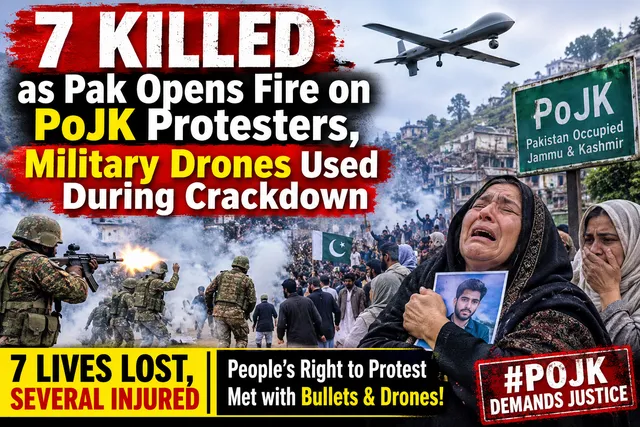
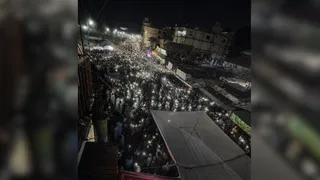

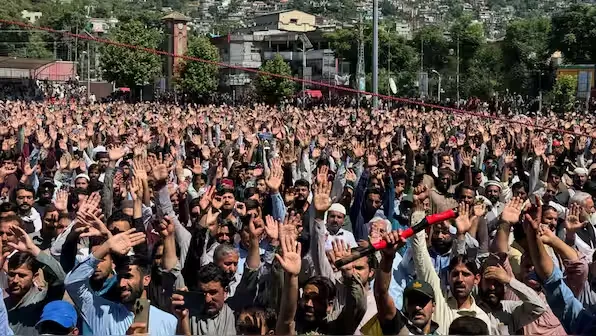
The current unrest in Pakistan-occupied Jammu and Kashmir (PoJK) is about far more than a protest movement or a dispute over political representation; rather, it strikes at the very foundation of what Pakistan has long claimed PoJK to be. Referred to by the Pakistani state as “Azad Jammu and Kashmir”, or “Free Kashmir”, the name is intended to serve as a political statement about Pakistan’s supposed commitment to Kashmiri aspirations.
But names alone cannot conceal reality. An “Azad” region where internet access can be curtailed during political unrest, where protesters can be labelled extremists, and where demands for accountability are met with coercion rather than dialogue begins to raise an obvious question: free from whom, and free to do what? If the measure of freedom is the ability of citizens to criticise those who govern them, organise politically, and peacefully express dissent without fear of repression, then the events unfolding in PoJK have exposed a gap between the rhetoric of “Azad Kashmir” and the reality currently experienced by many of its residents.That, in fact, is the central contradiction at the heart of Pakistan’s Kashmir policy. For years, Islamabad has argued that political dissent in Kashmir must be heard, that grievances cannot be suppressed through force, and that the aspirations of ordinary Kashmiris deserve international attention. These principles have formed the moral foundation of Pakistan’s case on Kashmir. Yet the moment similar arguments are directed towards Pakistan itself, the vocabulary changes. Protesters become troublemakers. Activists become foreign-backed agents. Demands for representation become threats to national security. The Kashmiri, it seems, enjoys an unquestionable right to self-determination only when that right is exercised against India. When it is exercised against Pakistan, it suddenly acquires limits. This is not merely a question of political inconsistency. It is a question of credibility. A state cannot indefinitely champion a principle abroad while suppressing its expression at home without eventually exposing the hollowness of its own narrative.
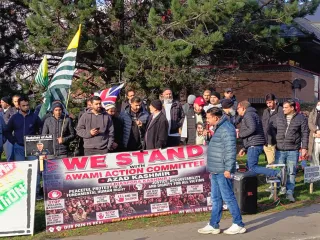
What makes the current protests particularly uncomfortable for Islamabad is that they cannot be dismissed as an extension of the India-Pakistan dispute. The demonstrators are not marching under the Indian flag; instead, their grievances are rooted in questions of governance, representation, accountability, and the relationship between PoJK and the Pakistani state. In other words, this is not a story about India at all. It is a story about Pakistan’s own conduct in a territory it has governed for decades. That is precisely why the usual playbook appears to be struggling. It is far easier to rally public opinion against an external adversary than to answer difficult questions from within the territory it claims to control.